
Grit and resilience drive Dr. Maureen McKiernan ’08 in her work as a cardiac surgeon



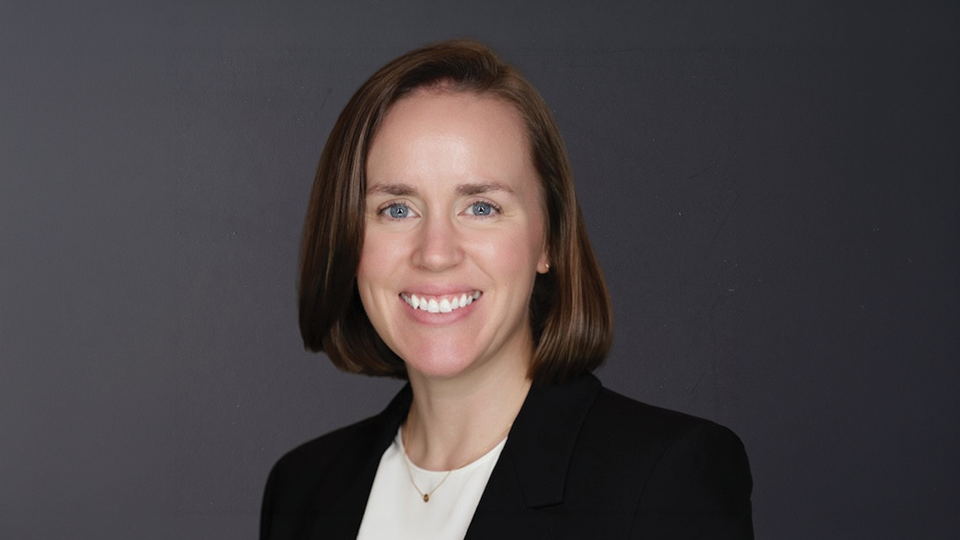
By Ashley Pauls
K-State Alumni Association
During her time as a student at K-State, Dr. Maureen McKiernan ’08 competed on the
university’s rowing team.
She still looks back on rowing as one of the hardest things she’s ever done — requiring
what she calls “sheer grit.”
That hard-fought resilience and determination still serves her today as a surgeon
at Columbia University Irving Medical Center in New York City, where she specializes
in cardiac surgery and in particular pediatric cardiac surgery and transplants.
“It's a long road; it is highly specialized, so it can be very competitive,” said
McKiernan, who is currently the only female cardiac surgeon at Columbia. “I think
at the end of the day, it's helping people, doing something that you know has a real
impact.”
McKiernan sees her current career as the merging of two paths. Growing up, she knew
she wanted to have a job related to science, and she also was part of a Catholic family
who were very active in the church and taught her the importance of altruism. A career
in surgery gives McKiernan the opportunity to solve scientific challenges and save
lives.
Although McKiernan’s parents were both KU alumni, as a senior in high school she had
a boyfriend who was a freshman at K-State.
“I would go to visit, and fell in love with the campus,” she said. “I wouldn't change
anything. I'm very happy with the education that I got and my experience in Manhattan.”
After earning a degree in chemistry from K-State, her next stop was the University
of Kansas, where she earned her M.D. Then, she completed a residency at Emory University
and a Congenital Cardiac Surgery Fellowship at Children’s Healthcare of Atlanta.
“The first year of medical school, we had a cardiac surgeon come give a guest lecture,”
she recalls. “And he was like, ‘If anybody wants to come shadow, just let me know.’
So I immediately jumped on that, ‘I want to see what this is about.’ And so my first
time watching a cardiac surgery, I just fell in love with it. I pretty much knew that's
what I wanted to do. And then when I got into residency, the same kind of thing happened.
I had no context for congenital cardiac surgery; I'd never seen heart surgery in babies
before. It just opened up that next door.”
As a surgeon, McKiernan’s workday typically starts at 7 a.m. with meetings, and then
by 9 or 10 a.m. she is ready to operate. A procedure can take anywhere from one to
two hours, or up to 10-12 hours. Even in routine cases, she’s always thinking ahead,
problem-solving and troubleshooting to provide the best possible care for her patients.
It’s a job that takes both a physical and emotional toll. There are happy days when
a procedure goes well, and the patients are able to return to full, happy lives. However,
there are also days when hard news must be delivered, and no amount of medical intervention
can change an outcome.
Yet even with the grueling hours and emotional moments, McKiernan can’t imagine herself
doing anything else.
“I am somebody who loves solving problems,” she said. “I love big challenges; I love
doing things with my hands. It's incredibly mentally stimulating work. But then seeing
that impact on the patient and the family is what gives you the goosebumps.”
While the majority of McKiernan’s time on the job is occupied by her caseload, she
also serves as an assistant professor of surgery and has an opportunity to train or
mentor medical students. And she encourages young adults interested in medicine to
persevere towards their dream, even if the journey is hard.
“It is a long road; it can be challenging,” she said. “But if you know it's what you
want to do, you can do it. It actually took me two times of applying to get into med
school. I wasn't going to let that first rejection deter me. Stick with it, and you'll
find a way.”