
Voices from history: How a K-State Libraries project is capturing stories of everyday life on campus



By Ashley Pauls
K-State Alumni Association
University Archivist Ryan Leimkuehler believes that every K-Stater has an important
story to tell — and he's on a mission to record as many of those stories as possible.
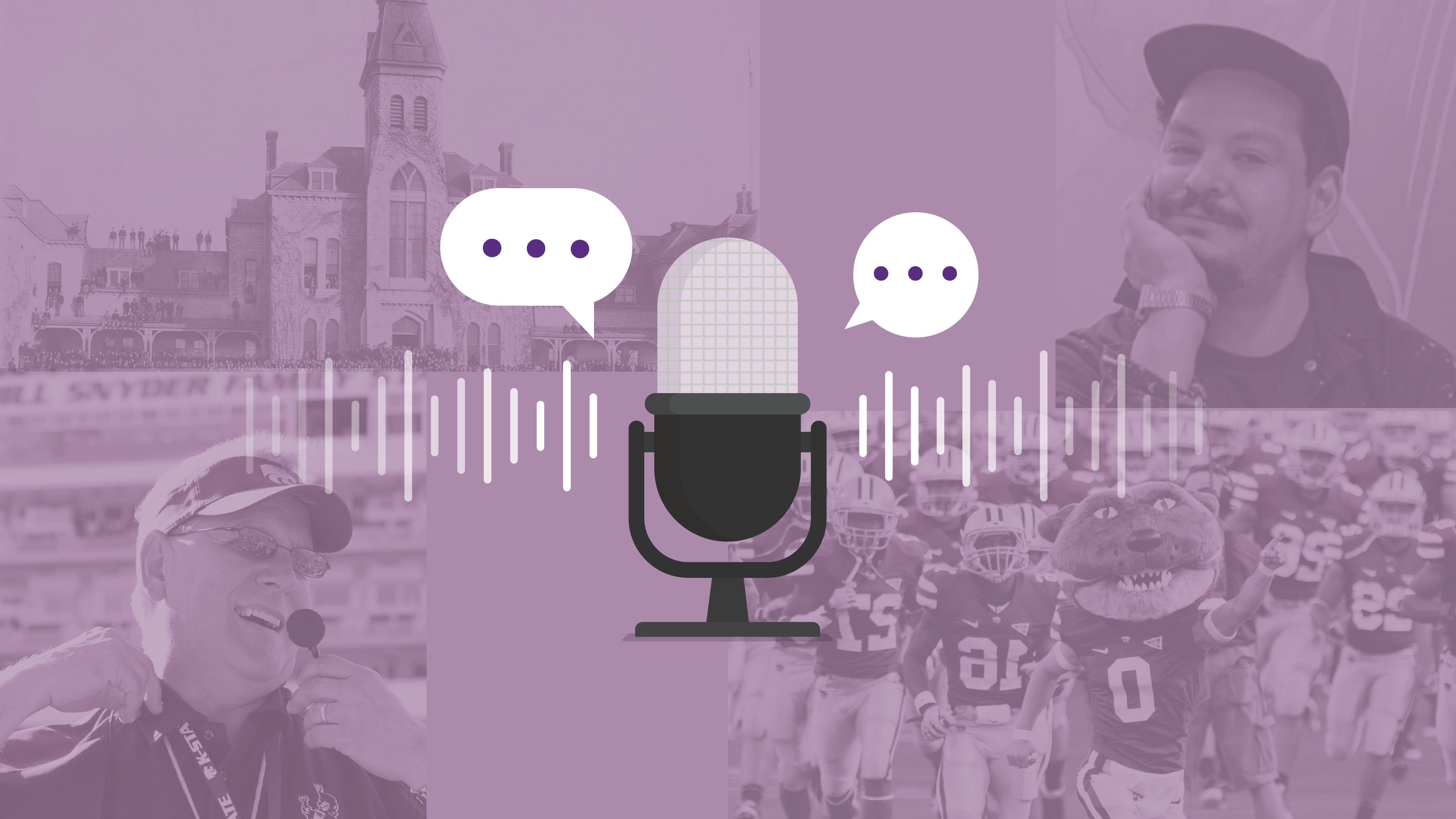
Leimkuehler is working with K-State Libraries on the new K-State Oral History Project, which will capture personal stories and reflections about everyday life throughout
different decades at K-State. Alumni, students, faculty, staff and friends are invited
to tell these stories — in their own words — through audio recordings.
“So the archives, we have lots and lots of records here in paper form, but a lot of
it documents the activities of the president's office or maybe research groups and
things like that,” Leimkuehler said. “As far as individual people stories, we don't
have as much of that, and so this is a way to fill in some of those gaps. And also
have people that may only show up in the yearbook, but their story doesn't get saved
in any other way. This allows them to give that context and go, ‘Well, we started
this jazz group on campus, and it was really popular.’ And maybe there's roots of
something that became a tradition at K-State, and we don't know why it became a tradition.
Someone might have insight.”
So, what exactly is an “oral history”?
Leimkuehler explains, “It really is just you sharing your stories. It is basically
just a conversation where you're telling me, what were your experiences, what did
you go through, what were your thoughts and concerns? That gives us insight, because
not a lot of people write things down, and so that might be the only thing that they
have, is their story or experience. That's what this oral history project's trying
to capture, are those things that don't show up in the yearbook or don't show up in
the newspaper, but it's still just as valuable.”
A story could be profound or impactful, or it also could be brief and fun. The important
thing is to capture those moments and memories before they are lost in time.
“People are like, ‘Oh, I remember this pizza shop was down in Aggieville, and do you
have any stories? Or do you have anything about it?’ And really, other than the ads
that show up in the paper, we don't really have any stories about that, and so that's
just one example,” Leimkuehler said. “It doesn't have to be a Ken Burns multi-hour
documentary. It can be four minutes long. It can be an hour. We have one person that's
doing seven interviews. You can be anywhere on that spectrum of things.”
One of the K-Staters providing an oral history is Armando Minjarez, an artist from
Wichita, Kansas, who is designing a mural in K-State’s Leadership Studies Building.
[Editor’s note: We previously featured Minjarez in an At K-State profile, if you would like to read more about his work.]
“It's so rare that we have someone to talk about the artwork that's on campus,” Leimkuehler
said. “Because a lot of times, people will say, ‘Oh, I remember this mosaic being
in my building,’ but we have no documentation or any story about it. So having the
artist's perspective is fantastic.”
Retiring director of bands Frank Tracz also has recorded an oral history for the project.
“We also interviewed one alumni that was in the marching band, and talked really highly
about Dr. Tracz and what the experience was like, and the life lessons that he learned
in the marching band and how that took him to being a teacher, and how it inspires
his leadership approach with his students,” Leimkuehler said. “So it's really cool
to see these full circle kind of things, where you have Dr. Tracz talking about his
philosophy, but this is also showing up in another alumni interview.”
How can I share my K-State story?
Leimkuehler said there are a variety of options for capturing a K-Stater’s oral history.
If you live close to Manhattan, you can record your story at the library’s Sunderland Foundation Innovation Lab. Leimkuehler said this type of recording experience has a podcast feel, where you’ll
be sitting in a sound booth in front of a microphone.
However, if you would prefer a more casual set up, the library has portable recording
equipment or they can even capture a story over Zoom if the subject lives far away
and isn’t able to travel back to campus in person.
Right now the stories are audio only, but Leimkuehler is excited about the possibility
of expanding into video stories if the concept takes off.
He said the oral history recording sessions are designed to be casual and low pressure.
You can bring a photo book or other mementos to the interview, and you will have input
on the questions being asked. You’ll also approve the recording before it is finalized
and authorize when you would like it to be shared publicly.
“Our process is all about informed consent, about every step along the process,” Leimkuehler
said. “Even if we get all the way to the final, and you're like, ‘Actually, I don't
really want that anymore,’ we're fine with not saving the recording. It's allowing
people to share that story, even if it's never going to be publicly available, right?
It's still a connection. We're still honoring that story.”
Leimkuehler reports that while the university is still in the early stages of this
project, about 25 oral histories are either in process or almost ready to be published.
Leimkuehler said that through the project, it’s been fascinating to learn how life
has changed at K-State over the years, but also how some core features of university
life — such as the importance of community — have remained the same.
“It's just great to see, because you always hear the stories of what K-State means
to people, the land-grant mission, but actually being able to see how it affected
people and how it has stuck with people, even past their time at K-State, there's
a lot of pride there,” Leimkuehler said. “If you are connected to K-State in any way,
we want to hear your story. It doesn't matter if you were head of the student body
or if you were a student at large. All these stories matter. All these people's perspectives
matter, and so we want to make sure that everyone feels welcome to share their stories,
their clubs, whatever they were involved with on campus.”
If you would like to participate in the Oral History Project, please contact libsc@k-state.edu.