
Exploring public art on campus is worth a walk



By Tim Schrag '12
If you look around, you’ll find art all over the K-State’s Manhattan campus.
Here are a few easy things to check out in your spare time:
The stained glass mural at the K-State Alumni Center
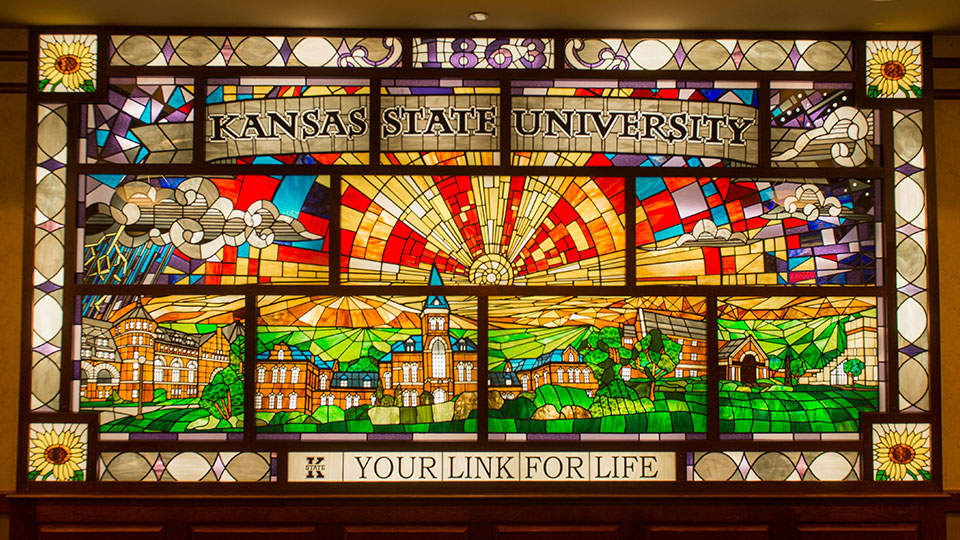
The mural, entitled A Spot I Love Full Well, is a stunning 14 feet x 7 feet stained glass mural paying tribute to four iconic buildings on campus – buildings that represent K-State’s history and tradition, academic excellence, student life, and campus beauty. The artwork for the mural was designed by Marcus Gilbert ’16.
It was made possible through the generosity of Gib ’80 and Brenda ’77 Compton of Park City, Kansas.
Mural at the Leadership Studies Building
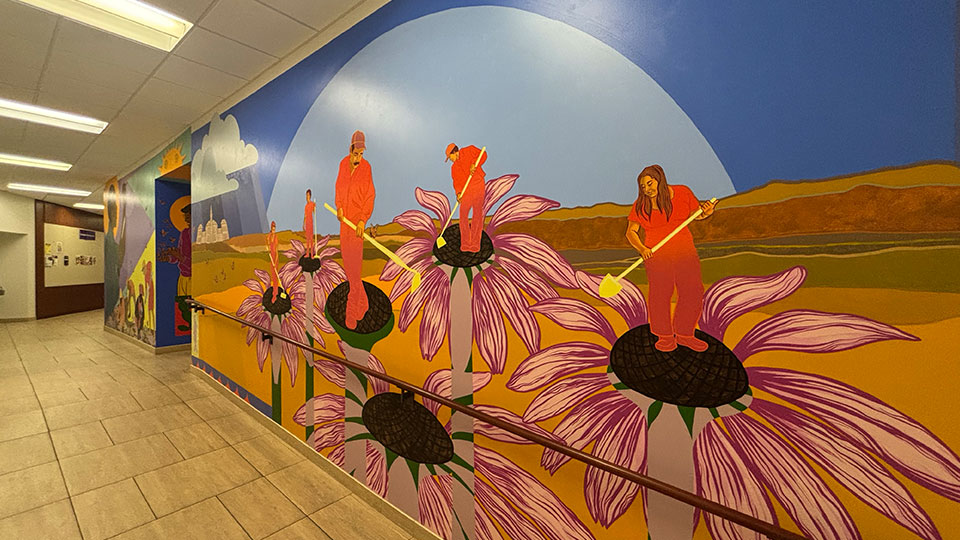 Bright colors, from bold lavender to sunny yellow to the vivid blue of the Kansas
sky, are incorporated into The Transmutation, by former K-State student Armando Minjárez along with symbols important to the prairie of the region, including the bison and
wildflowers, and a number of faces, some a part of K-State’s history and some that
speak to the possibilities in the university’s future.
Bright colors, from bold lavender to sunny yellow to the vivid blue of the Kansas
sky, are incorporated into The Transmutation, by former K-State student Armando Minjárez along with symbols important to the prairie of the region, including the bison and
wildflowers, and a number of faces, some a part of K-State’s history and some that
speak to the possibilities in the university’s future.
Visit the Beach Museum
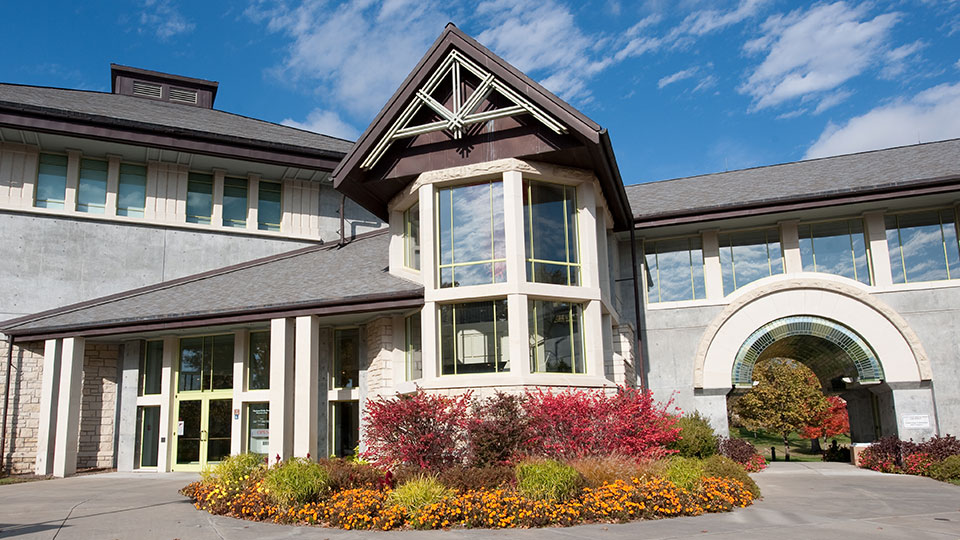 The Marianna Kistler Beach Museum of Art celebrates regional art and brings art and artists from around the world to the heart
of Kansas. Its collection continues to focus on the art of Kansas and the region,
including artists like John Steuart Curry, Gordon Parks ’70 and Birger Sandzén ’31,
among others.
The Marianna Kistler Beach Museum of Art celebrates regional art and brings art and artists from around the world to the heart
of Kansas. Its collection continues to focus on the art of Kansas and the region,
including artists like John Steuart Curry, Gordon Parks ’70 and Birger Sandzén ’31,
among others.
Prof. Alden Krieder Mosaics
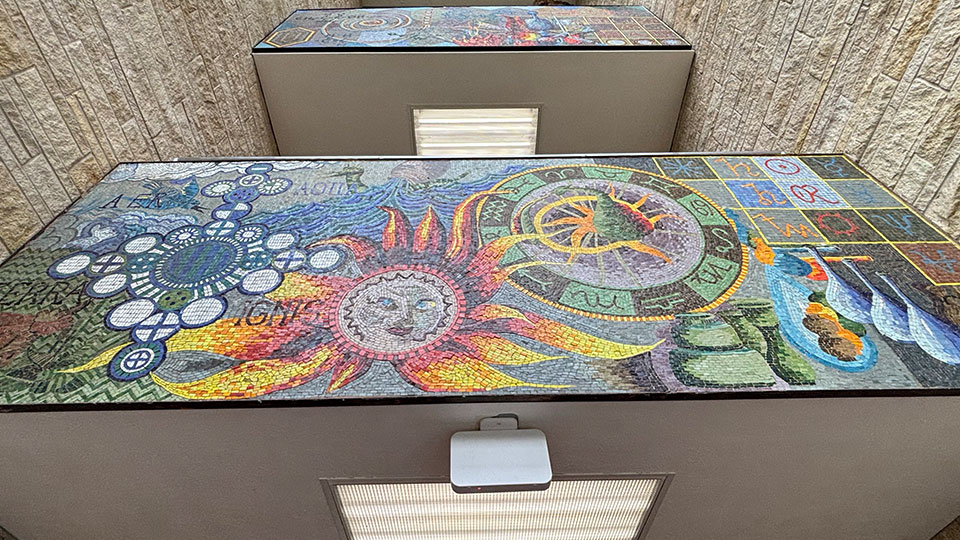 Prof. Alden Krieder began teaching mosaic classes in 1958. From that grew a legacy with impact across
the campus; 16 of the class’ mosaics are found on campus, including in the K-State
Student Union, the Engineering Complex, the Ward Hall nuclear reactor and other locations.
Prof. Alden Krieder began teaching mosaic classes in 1958. From that grew a legacy with impact across
the campus; 16 of the class’ mosaics are found on campus, including in the K-State
Student Union, the Engineering Complex, the Ward Hall nuclear reactor and other locations.
Historic Farrell Library Great Room Murals
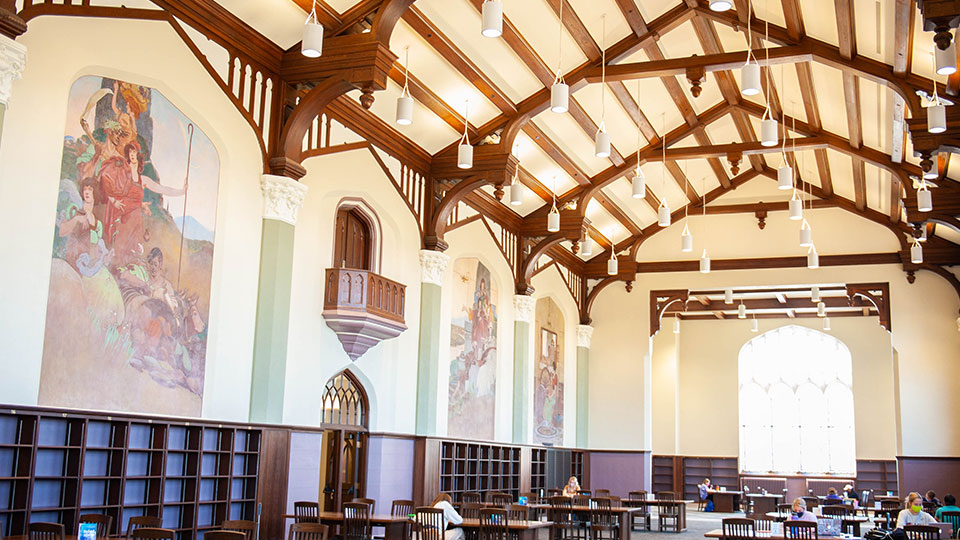
In 1934, the federal government's Public Works of Art Project, a program that helped people find jobs during the Great Depression, commissioned the murals. David Overmyer, an artist from Topeka, and his assistant Byron Wolfe were hired to paint four murals to be displayed in the Great Room.
Each of these murals is 11 feet x 14 feet and their subjects symbolize the four major academic pursuits of the institution at that time: science and industry, agriculture and animal husbandry, the arts, and home economics.